January 15, 2013 – Coffee & Politics Series
Byron E. Shafer: “The Three Worlds of Postwar American Politics”
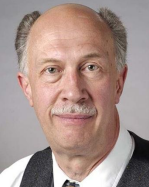
The most recent era is characterized by unified partisan control, but tending to swing between Republicans and Democrats. How does this understanding of the American political landscape help us grapple with the politics of today and put the Obama presidency in perspective?
Byron E. Shafer is Glenn B. and Cleone Orr Hawkins Chair of Political Science at the University of Wisconsin, Madison. Before coming to Wisconsin, he was Andrew W. Mellon Professor of American Government at Oxford University. He is a specialist in the politics of presidential selection and has written extensively about campaigns and elections, about political parties, about policy conflicts, and about the big picture in American politics.
January 17, 2013 – Coffee & Politics Series
Allen Buchanan: “Science, Ethics, and Democracy”
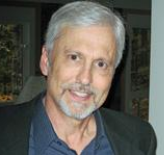
What are the ethical issues raised when making public policy decisions that are informed by scientific knowledge? Allen Buchanan, James B. Duke Professor of Philosophy and Professor of Law at Duke University, explores this question.
February 5, 2013 – Coffee & Politics Series
Dan Tichenor: “Faustian Bargains: The Politics of Immigration Reform”
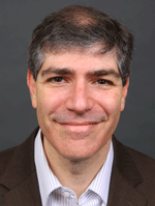
Dan Tichenor argues that for more than a decade, most Americans have agreed that the nation’s immigration system is “broken” while political battles in Washington have made comprehensive reform unlikely. Dan Tichenor is the Phillip H. Knight Professor of Social Science and Senior Faculty Fellow at the Wayne Morse Center for Law and Politics at the University of Oregon.
February 7, 2013 – Coffee & Politics Series
Peter Chilson: “Terrorism in Mali: Conflict and Military Intervention in Sahel”
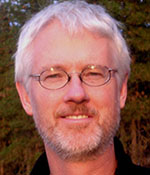
Recent developments in Mali, including the growing policy rift between the Pentagon, favor stronger American military involvement, and the Obama White House, which appears to be taking a more cautious approach. Peter Chilson is a Professor of English at Washington State University. He received a Masters of Fine Arts in creative writing from Pennsylvania State University. He is a former Fulbright Scholar and has traveled frequently to West Africa and has written extensively about the region.
February 19, 2013 – Coffee & Politics Series
Howard Rosenthal: “Political Bubbles & Financial Crises”
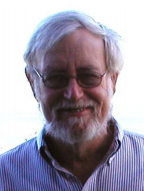
Demonstrating how political bubbles helped create the real estate-generated financial bubble and the 2008 financial crisis, Professor Rosenthal argues that similar government oversights in the aftermath of the crisis undermined Washington’s response. Howard Rosenthal is professor of politics at New York University and the Roger Williams Straus Professor of Social Sciences, Emeritus, at Princeton University.
February 22, 2013 – Olympia Symposium
Panel discussion: “Women in Politics: Challenges and Successes”
The state of Washington has traditionally been at the forefront of electing women to public office. However, that success has not been replicated across the country, and has been uneven in Washington. Panelists include Cathy Allen, Lisa Brown, Richard Fox, Maureen Walsh, and Rachel La Corte (moderator).
February 26, 2013 – Coffee & Politics Series
Panel discussion: “Is Gun Control Necessary?”
Recent shootings in schools and public spaces have placed a dialogue about gun policy legislation firmly in the spotlight. Our panel includes Robin Ball, an election volunteer coordinator for the National Rifle Association, and Daniel Byrne, a voluntary spokesperson for the non-profit organization Washington CeaseFire.
February 28, 2013 – Coffee & Politics Series
Tony Lockett: “Political Polarization in Europe”
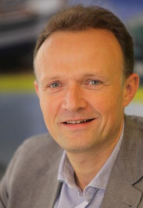
in addition to the recent debt crisis, there has also been a rise in extreme political parties in many parts of the continent. What is the role of the EU in maintaining political unity in Europe? Tony Lockett is a communication Specialist who works for the European Commission in Brussels and is currently a European Union Fellow at the University of Washington. He has been involved in European Union policy-making for over 15 years, most recently in the area of regional economic development.
March 9, 2013 – Foley Distinguished Lecture
Morris Fiorina: “The Era of Political Instability”
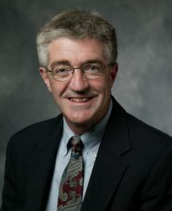
Renowned scholar and political commentator Morris P. Fiorina will discuss what the 2012 election means in historical context. Fiorina is the Wendt Family Professor of Political Science at Stanford University.
April 9, 2013 – Coffee & Politics Series
Bob Ferguson: “Tension with the Federal Government: Marijuana, Marriage Equality, and Hanford”
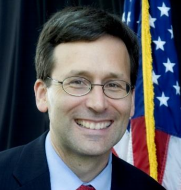
How does the attorney general work with the federal government to solve important issues facing Washington State such as marijuana use, marriage equality, and the ongoing cleanup at Hanford? Bob Ferguson is Washington’s 18th Attorney General.
April 18, 2013 – Business Policy Symposium
“Budget Crisis and Grand Bargains”
With Democrats and Republicans entrenched, a long-term budget agreement will be difficult to reach. Our panel of experts discussed the possibilities involving entitlement reform, revenue increases, and further budget cuts.
CO-Sponsored by the Carson College of Business
April 19, 2013 – Coffee & Politics Series
Elena Mastors: “Talking with Terrorists”
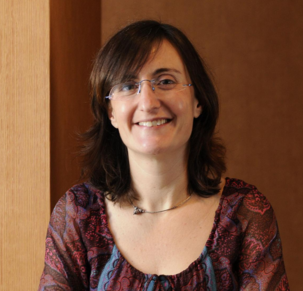
Dr. Elena Mastors explores political psychology and is the Dean of the School of Security and Global Studies at American Military University.
April 22, 2013 – Coffee & Politics Series
Natalie Stroud: “Stop Watching Fox News! Can we affect people’s preferences for like-minded information?”
Do the media determine a person’s political ideology or does a person’s politics determine the type of news they watch? Natalie Stroud is Associate Professor of Communication Studies and Assistant Director of the Annette Strauss Institute for Civic Participation at the University of Texas Austin.
April 22, 2013 – Media & Politics Symposium
“The Media and Political Polarization”

A distinguished panel of experts will discuss how the media influences political attitudes. Does the media reflect or create greater political polarization?
Co-Sponsored with the Edward R. Murrow College of Communication