September 1, 2026 – US Midterm Election Series
Seth McKee: “Midterm Elections in an Age of Political Volatility, 2004–2026”
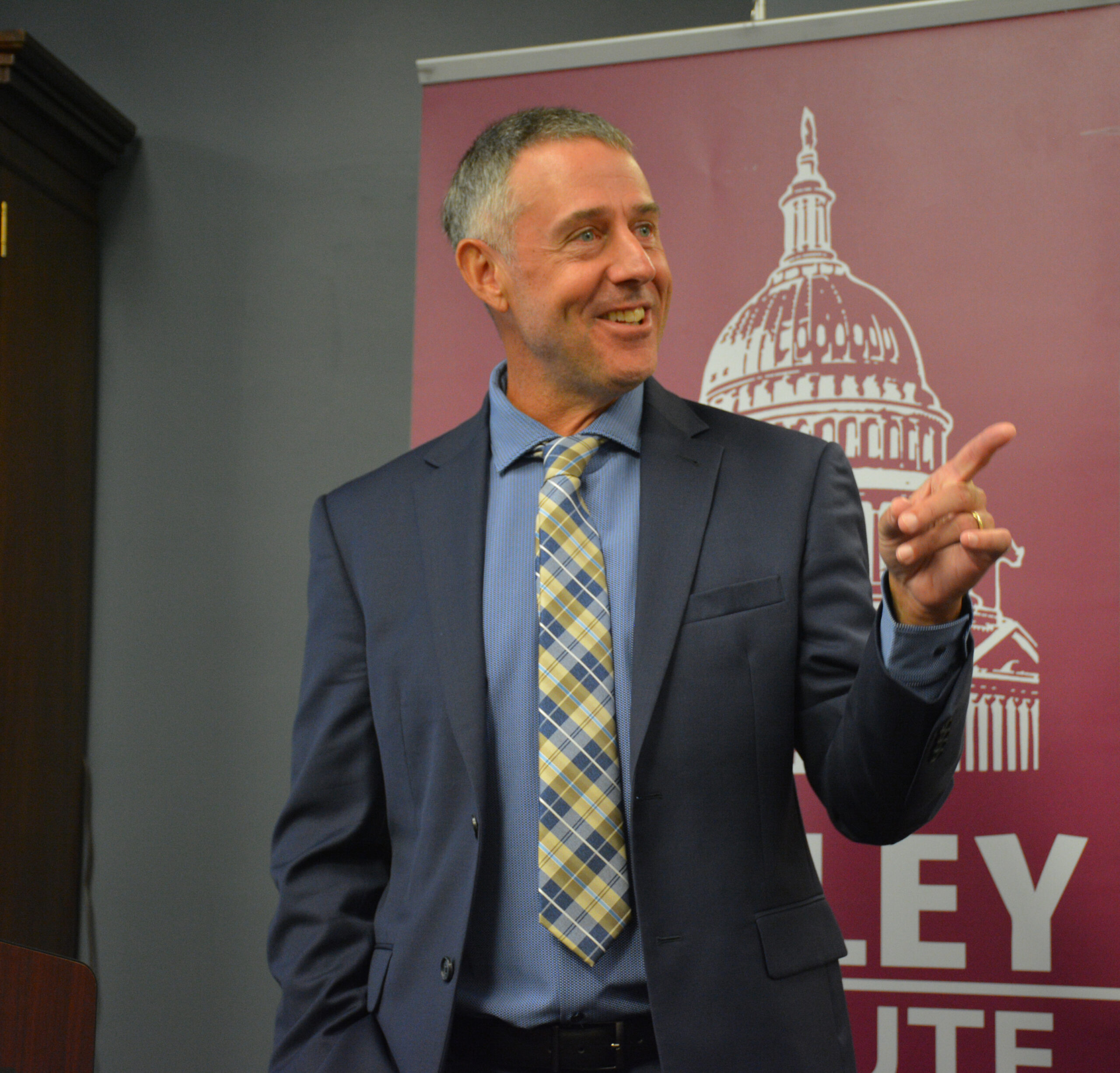
On September 1, the Foley Institute welcomed Seth McKee, who spoke on the connections between public disapproval of the presidential administration and possible consequences for the midterms.
Professor McKee opened his presentation by analyzing historical midterm outcomes and public opinion of the presidency. Referring to historical data and trends, McKee showed a strong relationship between negative presidential public approval ratings and the president’s party losing seats in Congress. He noted that Trump’s disapproval ratings are the highest in recent history for a president going into midterms. McKee argued that this would indicate significant challenges and consequences for Republican candidates and the party’s control of Congress.
McKee placed this into the context of a broader, consistent trend in recent presidential administrations, where negative public opinion of the presidency punishes the president’s party in midterm elections. He described this as being influenced by an angry voter bloc in the American electorate known as a “Negative Coalition.” This coalition grows stronger in midterms and is energized for higher turnout against the opposing party, especially when presidential disapproval is higher.
McKee argued in closing that due to the midterm cycle and high disapproval of the presidency, Republicans have a very tough midterm ahead and are likely to lose full control of Congress given the very slim majority in the House.
Seth McKee is a professor in the Department of Political Science at Oklahoma State University.
You can watch this event again on the Foley Institute YouTube channel.
September 3, 2026 – US Midterm Election Series
Louis Jacobson: “Covering Congressional Races”
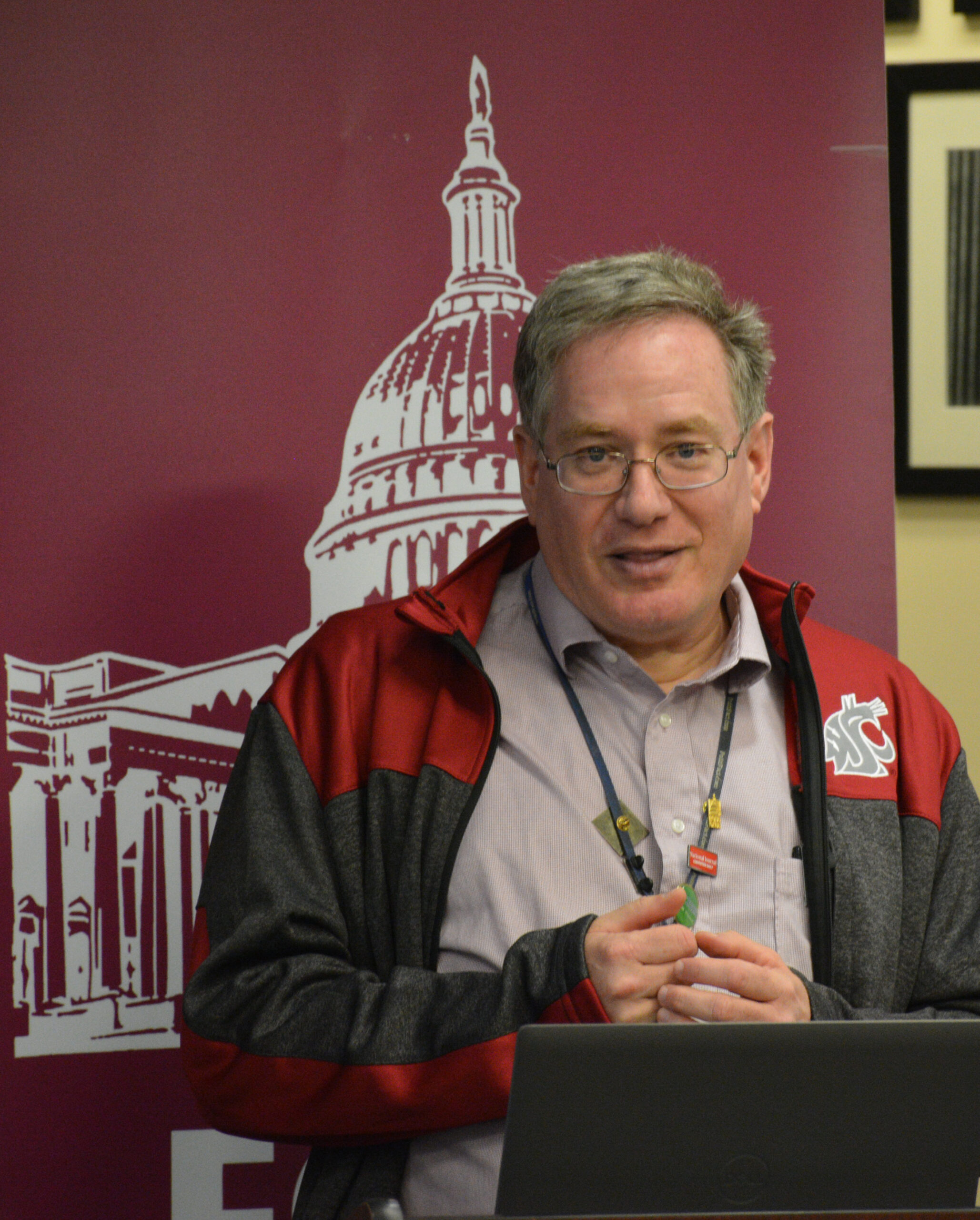
On September 3, the Foley Institute hosted Louis Jacobson, chief correspondent for PolitiFact, who discussed what is at stake in the upcoming 2026 midterm elections.
Jacobson opened his discussion by noting some of the parallels between the 2026 midterm and the 2024 presidential election, pointing out the low presidential approval ratings and economic concerns during both administrations. He went on to say that, while it is not a presidential election, midterms are virtually always negative for the sitting president’s party, especially given the current administration’s unpopular actions and broken promises.
After reviewing Congress’s current makeup, Jacobson discussed what it would take for Democrats to flip both the House and Senate. He also discussed the gubernatorial races, with 36 seats up for election and each party holding 18. He mentioned that Trump gained a lot with voters in 2024, but those gains are unlikely to carry over to these midterms, and with all the seats up for election, much could change.
Jacobson concluded by saying that the only constant in elections is change, and that voters are restless. Looking at the historical data, he noted how many flips have occurred since 2000 in either the House or Senate. Jacobson then predicted, based on the data, that a flip is very likely, with the House most likely to flip and the Senate as a real possibility.
Louis Jacobson is the Chief Correspondent for PolitiFact.
You can watch this event again on the Foley Institute YouTube channel.
September 15, 2026 – US Midterm Election Series
David Kimball: “Redistricting and voting rights”
On September 15, the Foley Institute hosted David Kimball, who discussed gerrymandering efforts across the nation and the negative consequences that they pose for voters and democracy.
In his initial comments, Professor Kimball focused on Missouri, where Governor Mike Kehoe called a special session to approve redistricting maps targeted at unseating a Democrat from Congress. This was followed by efforts to repeal the redistricting through a ballot referendum and led to a series of legal battles between the Secretary of State and the Missouri state supreme court.
Kimball emphasized that Missouri is not an isolated case; there are many states facing redistricting battles across the country. Referring to gerrymandering as a growing partisan arms race, Kimball elaborated on how extreme scenarios are becoming normalized. “Voters are not very well represented if you look at California and Texas,” he explained, elaborating on how these state’s partisan redistricting impacts voter representation. Kimball emphasized that gerrymandering makes legislatures and public officials less responsive to shifts in public opinion and that the frequent map changes are confusing for candidates and voters alike.
In closing, Kimball proposed that there are ways to combat gerrymandering. He stated that state institutions and their responses would be key, and that having independent redistricting commissions could help reduce and prevent partisan gerrymandering. He also proposed that establishing a proportional representation voting system with more members of Congress would likely make gerrymandering more difficult.
David C. Kimball is professor of Political Science at the University of Missouri-St. Louis.
You can watch this event again on the Foley Institute YouTube channel.
September 10, 2026 – Foley Distinguished Service Award 2026
Mike Pence to receive Foley Distinguished Service Award 2026
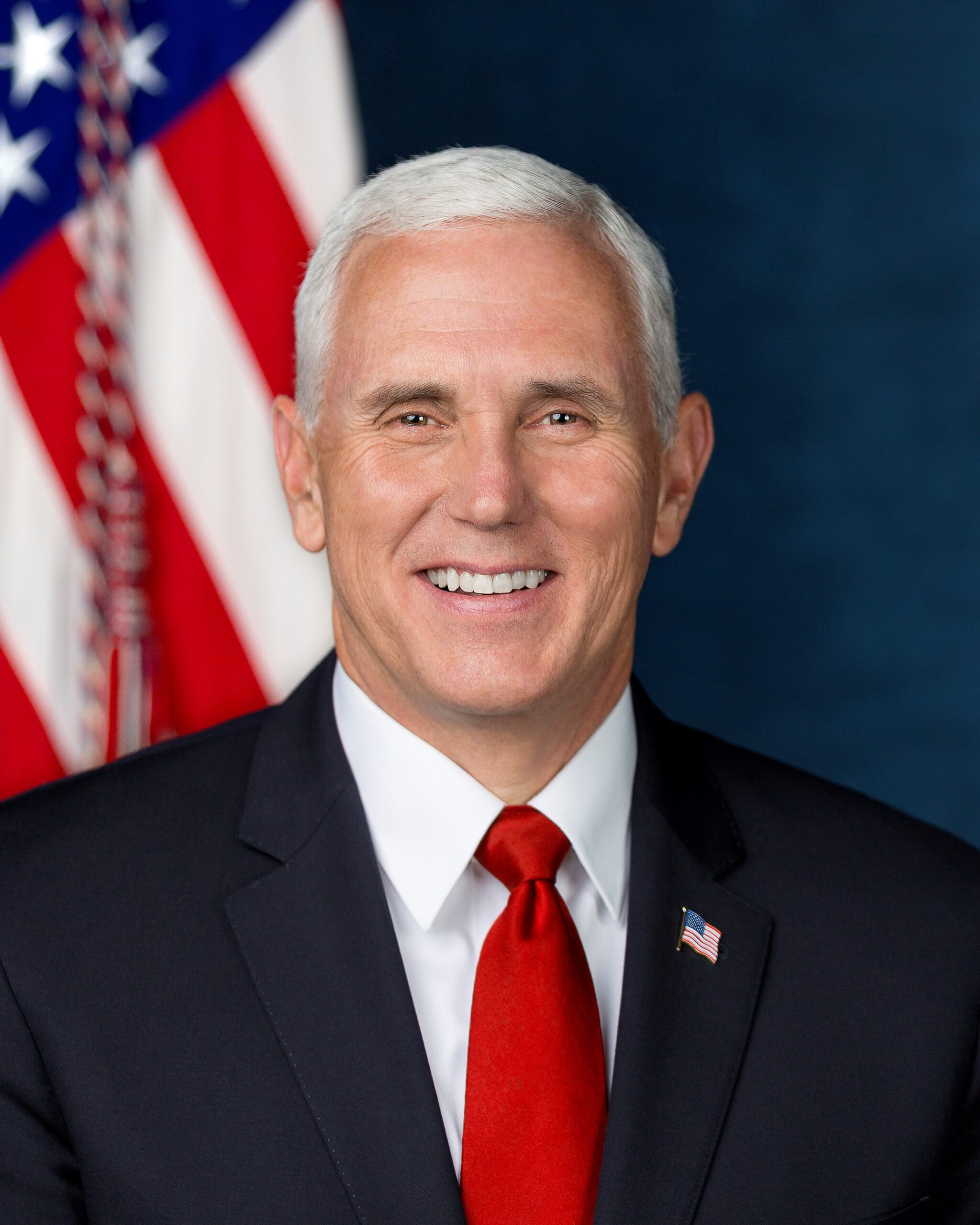
Please join the Foley Institute and distinguished guests for the presentation of the annual Thomas S. Foley Award for Distinguished Public Service to the 48th Vice President of the United States, Mike Pence.
The 50th Governor of the State of Indiana and U.S. Representative from Indiana will receive this year’s Thomas S. Foley Award for Distinguished Public Service in a ceremony to be held in Spokane.
Learn more about the Foley Distinguished Service Award and Spokane event.
September 17, 2026 – Constitution Day Event
Free documentary showing
“Flag Day”
On Constitution Day, join us for an inspiring documentary that focuses on the largest annual Flag Day parade located in Three Oaks, Michigan. It focuses on issues of ritual, identity, and belonging in a polarized America.
The showing will be followed by a discussion, moderated by Braver Angels WA, a non-profit dedicated to reducing political polarization.
Join us at 1:30 pm in the Foley Speaker’s Room, 308 Bryan Hall