Spring 2026
Use the key word search function  at the left of this page to find specific events
January 27
“Rabbit holes, rumors, & online propaganda”
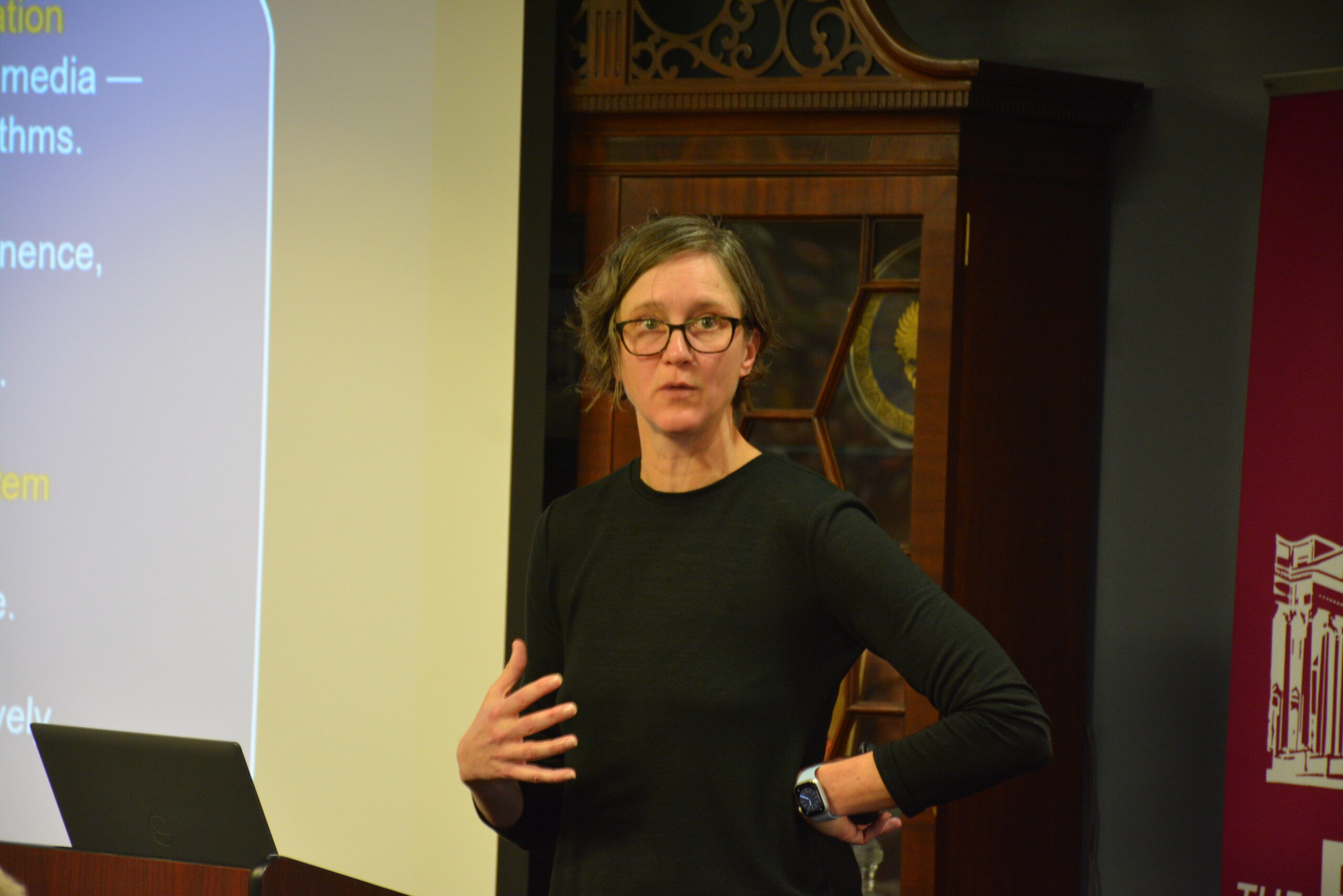
On January 27, the Foley Institute hosted Kate Starbird, University of Washington, who discussed the ways that online rumors and misinformation are spread during crisis events.
Professor Starbird opened her discussion with a pervasive internet rumor created in the wake of Hurricane Sandy of a manipulated image of a shark swimming through flooded freeway waters. She then talked about other rumors with potentially more serious outcomes, such as when internet sleuths incorrectly identified the assailants of the Boston Marathon bombing in 2014, marking a turn from internet volunteerism to online vigilantism. This shift, she said, means that “collective sensemaking could go awry” in the context of understanding crisis events.
Using data from social media posts following crisis events, Starbird and her team found that the online crowd is rarely “self-correcting”, and at the same time, professional journalism cannot keep up with the pace of online news. As a result, the public’s understanding of crises can be intentionally manipulated, with bad actors able to exploit attention dynamics and profit from them.
Starbird concluded by suggesting that disinformation in the modern era is participatory, advanced by social media influencers to further political goals. Ending with a call to action, she emphasized that the solution requires everyday individuals acting as “influencers in their own circles”. By engaging in discourse, speaking out, and not leaving the discussion to online actors who know how to hijack the system, individuals can leverage the participatory nature of the digital era to advocate for truth and democracy.
Kate Starbird is a professor in the Department of Human Centered Design & Engineering at the University of Washington.

January 28
“Being human in the age of AI”
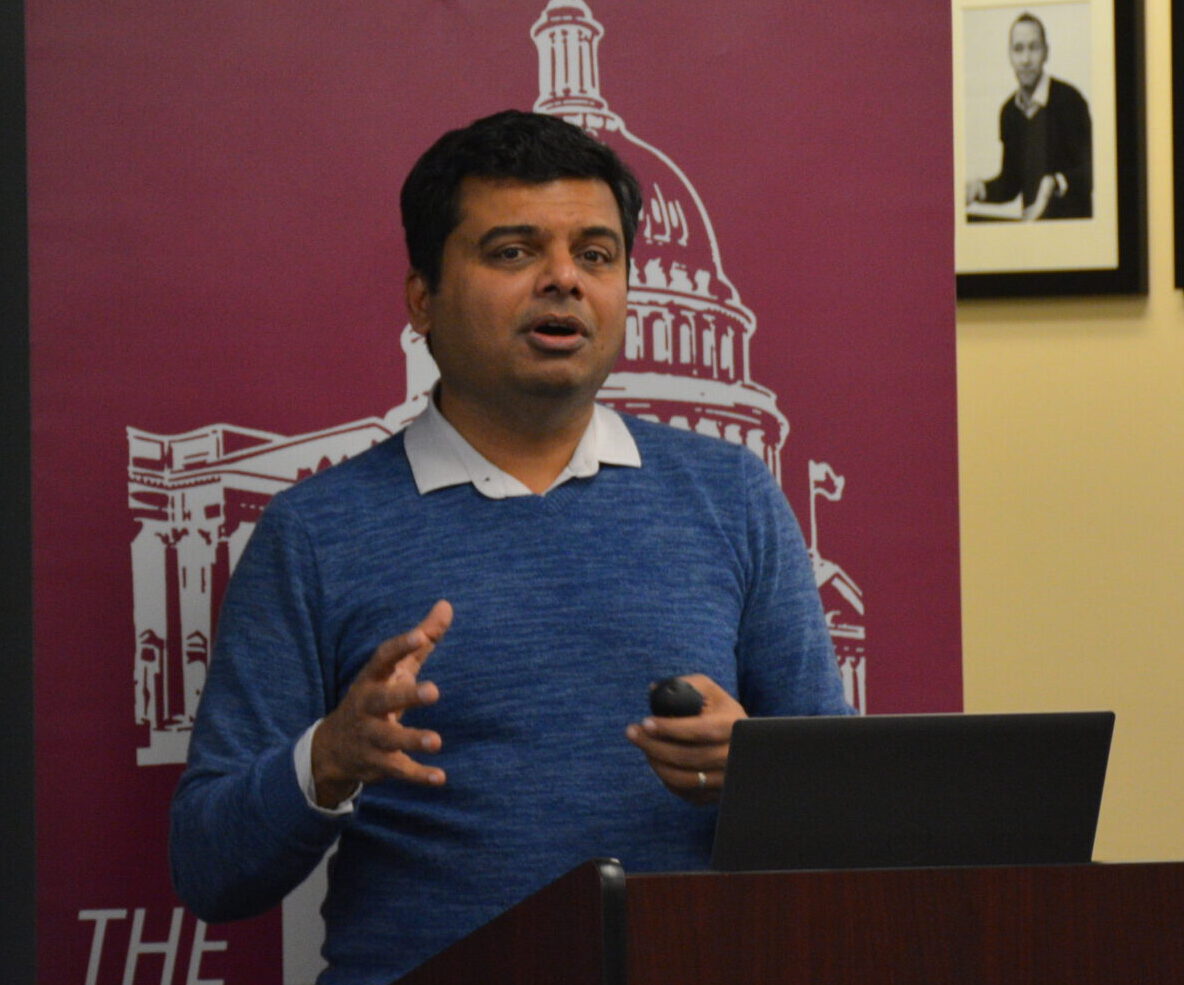
On January 28, the Foley Institute hosted Chirag Shah from the University of Washington, who spoke on the evolving boundaries between human identity and artificial intelligence. He began by using historical examples, such as the “Mechanical Turk,” to highlight how humanity has long been intrigued by, and easily deceived by, machines that appear to possess human-like intelligence. Shah argued that AI today, specifically large language models and generative tools, are closing in on uniquely human territories, such as creativity, emotional intelligence, meaning-making, and ethical reasoning. Shah emphasized that the challenge is not only the technology’s capabilities but also its ability to mimic authentic human signals.
Shah’s presentation examined several moral and practical issues arising from the integration of AI. By using the famous trolley problem and the development of self-driving cars, he highlighted the challenges of programming ethics into an AI machine when humans themselves can’t agree on a universal ethical code. Shah also addressed the use of AI in therapy and education, questioning whether a lack of true understanding can provide meaningful support and help students learn. He pointed out that while AI can mimic human abilities, AI still lacks the continuity of experiences and vulnerability that define the human condition.
Shah concluded by advocating a conscious co-evolution in which humans proactively decide which tasks to retain and which to delegate. Though, he suggested that continuing to engage in some tasks that result in minor struggles may be a part of being human. He warned that outsourcing all effort to AI might lead to a loss. Shah encouraged the audience to move beyond the narrative of “Human vs. AI” and focus on what kind of humans they want to be in this new age.
Chirag Shah is a professor in the Information School at the University of Washington.
February 12
“Authoritarian populism from Hungary to the U.S.”
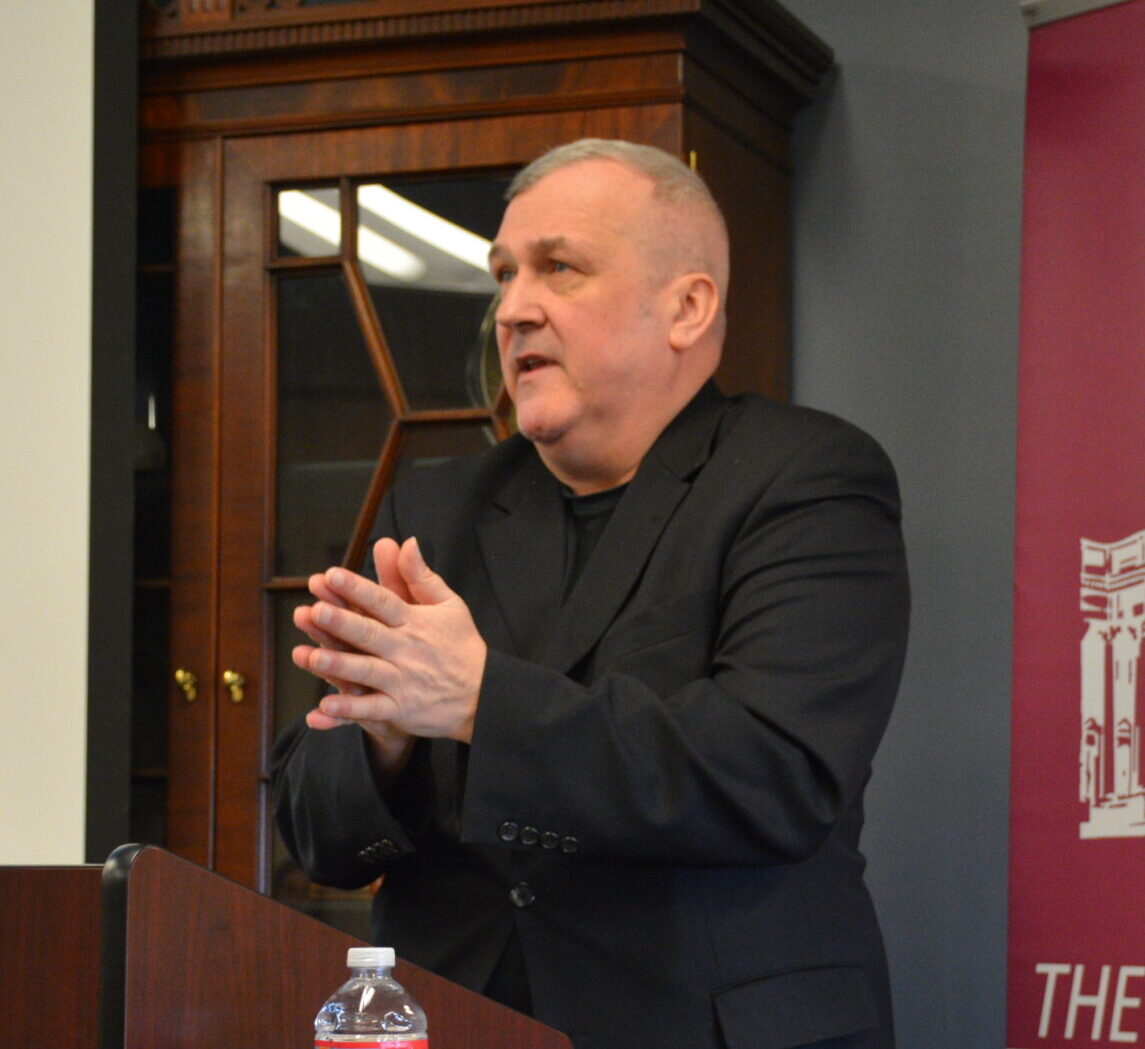
On February 12, the Foley Institute hosted Andrew Ryder of Eötvös Loránd University, Budapest, who spoke about how Viktor Orbán’s Hungary is influencing policies of the current U.S. administration under Donald Trump.
Ryder began his presentation by reflecting on his experience as an activist and academic, noting that the 2015 turn towards authoritarianism in Hungary, the Brexit vote, and the 2016 U.S. election compelled him to speak out. Throughout the discussion, Ryder explored the parallels between authoritarian populism in Hungary and recent political shifts in the U.S.
He focused on the “bromance” between Viktor Orbán and Donald Trump, which Ryder argues is rooted in shared ideological and stylistic traits. He observed that both leaders rely on a strongman persona to frame politics as a state of emergency. He shared that this style of leadership resonates with a specific demographic of voters in rural areas and “rust belt” regions who feel economically insecure and culturally displaced by globalization.
Ryder then explained how both movements leverage nostalgia and a sense of national victimhood. While the U.S. movement looks to “Make America great again,” Hungarian populism draws on the trauma of the 1920 Treaty of Trianon to foster a rigid, nativist identity. This identity is reinforced through “post-truth” politics, where scientific facts and rational debate are replaced by moral panics and conspiracy theories designed to keep the public in a state of high emotion.
Ryder also highlighted the international implications of this alliance. He noted that the Trump administration’s relationship in Europe has led to a reorientation away from traditional allies and toward nationalist regimes like Hungary’s. However, he provided a moment of hope for those against authoritarian populism by citing the 2021 Budapest Pride march, where over 100,000 citizens defied government threats of prosecution. Thus, signaling that the strongman narrative loses its power when the public refuses to be intimidated.
Ultimately, Ryder warned that the “Putin-ization” of Hungary, marked by cronyism and corruption, should serve as a cautionary tale for the United States’ future. He concluded that the best defense against this trajectory is the restoration of a rational public sphere and the implementation of stronger social protections to address the underlying inequality that fuels populist anger.
Andrew Ryder is the Director of the Institute for Political and International Studies, Eötvös Loránd University, Budapest.
February 25
“AI, democracy, and the problem of control”
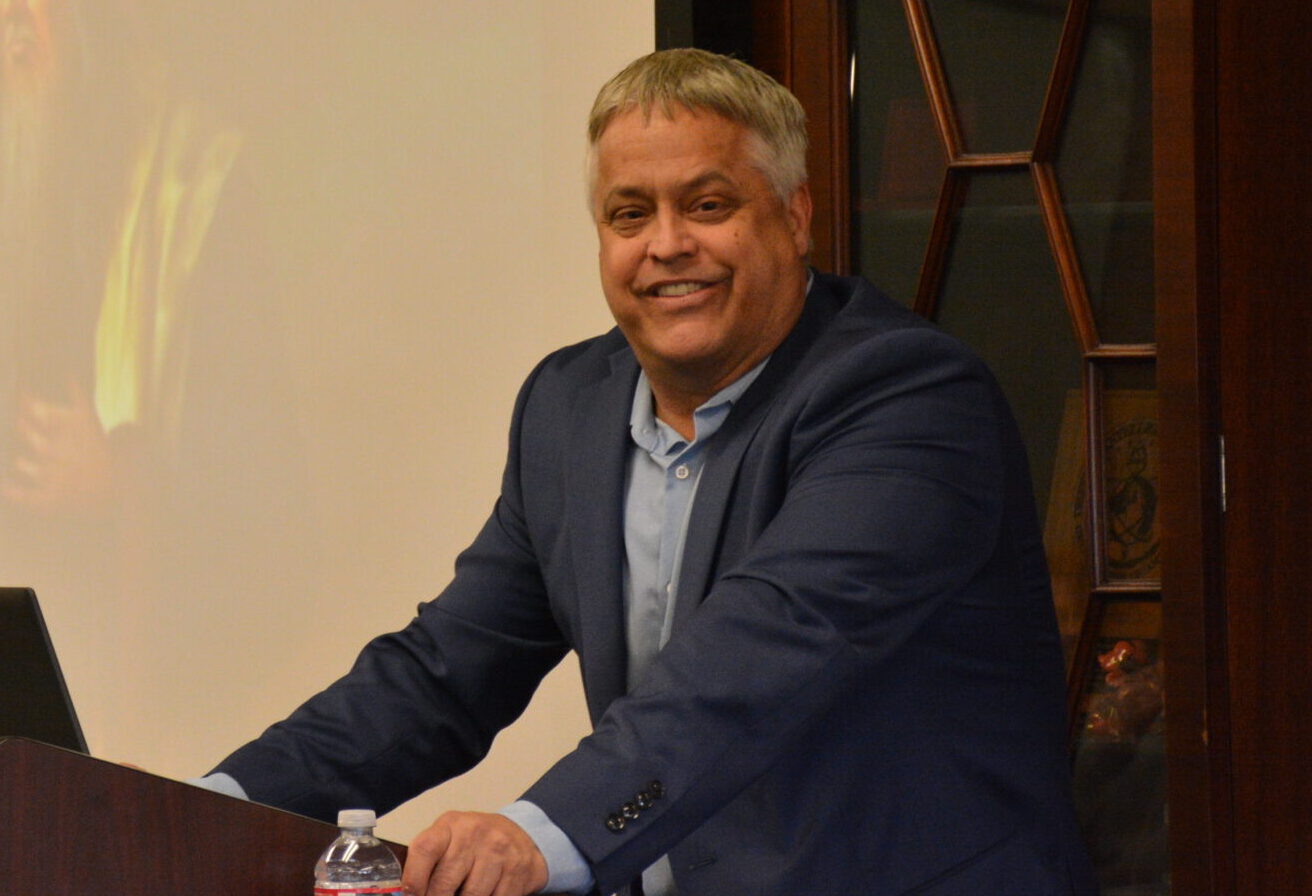
On February 25, the institute welcomed Mark Fagiano from WSU. Professor Fagiano began by asking how do we ensure powerful systems continue to act in accordance with our intentions or objectives?
He noted that there are different types of control failures, including technical, ethical, political, and cultural failures. To prevent technical failures in AI, he said, the public needs to be aware of how AI truly works and the risks associated with AI decision-making. He stressed the importance of this if we are to maintain power over a machine that will become more powerful than humans.
Fagiano noted an issue with value alignment: AI systems act in accordance with shared value systems. He explained that this is difficult to ensure, given that values vary widely and even conflict with each other. Other ethical dilemmas relating to AI control include determining who is responsible for harm caused by autonomous entities and how the biased internet data AI draws from may negatively influence its outputs.
Lastly, he spoke on the issue of control problems over AI in the political dimension, and suggested that it is important to ask how AI will be governed. This would include questions about what democratic oversight exists for AI, but is complicated by the fact that different nations have different norms for governance. Further, the speaker noted that AI seems to be the “perfect tool for authoritarian rule”, with functions like mass surveillance, predictive policing, and the ability to monitor and silence activists. He pointed out that some of these functions may at first appear innocuous but may still reflect contrasting values. For example, mass surveillance is the conflict of the value of safety versus privacy.
To conclude, Professor Fagiano agreed that AI development is not inherently detrimental, acknowledging that there is great benefit to be gained from these systems. However, he urged the audience to consider what might go wrong, such as the erosion of the rule of law or social trust, and not to accept the changes passively AI will make to the world.
Mark Fagiano is assistant professor of philosophy at Washington State University.